The exchange rate of the Kazakh currency is staggering under the pressure of the budget, vacations and emotions. The National Bank intervenes pointwise, but the market is already living up to expectations of a dollar appreciation.
To what extent the republic's budget is social and how corruption components reduce the effectiveness of government spending.
Why arguments about Kazakhstan's social budget are a myth, and where the budget trillions actually go, says economist Askar Kysykov.
The Government of Kazakhstan is working to grow the economy, and it is necessary to improve the quality of life of the population. The goal determines the means. Maybe the wrong goals were initially chosen in the country? In which direction should the vector of the government's policy turn in order to grow not only the economy, but also the quality of life of Kazakhstanis? We are talking about this today.
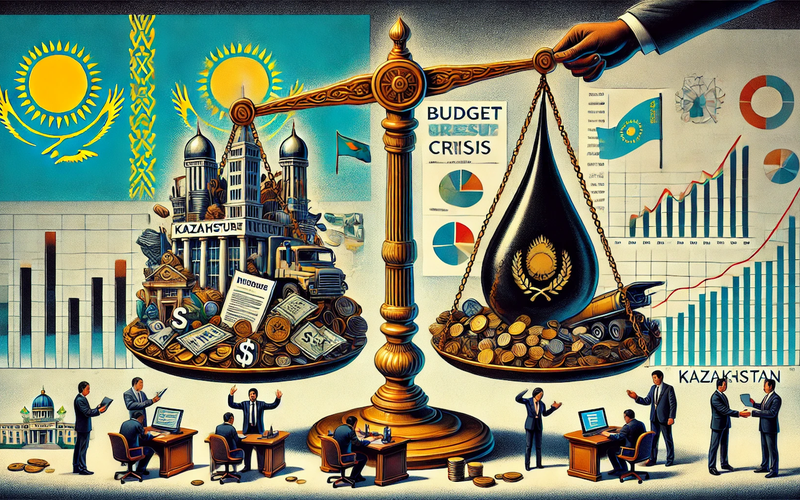
The gap between income and expenditure of the domestic budget is growing. According to the most optimistic calculations of the government, this year the country's budget deficit will amount to more than 4 trillion tenge. What is the risk of this imbalance and what to do? We'll find out today. When state finances sing romances Expenditures of the local and national budgets in 2024 increased by 13.4%, eventually amounting to 34.7 trillion tenge.
The main factor of influence is the economic policy of the government What trends will determine the housing market in Kazakhstan this year, how will inflation, the dollar exchange rate and other factors affect the industry? Why don't we have mortgages at 2% per annum, as in Germany? And what needs to be done to ensure that as many citizens as possible have a roof over their heads? We are discussing with market experts and economists.
In recent years, Kazakhstan's economy has been shaken not only by global shocks but also by internal structural problems. The expert community has brought to the fore questions about the efficiency of public finance management and the need to adapt to new economic realities. Whether Kazakhstan faces a public finance crisis was discussed by experts at a round table organized by the TALAP Center for Applied Research.
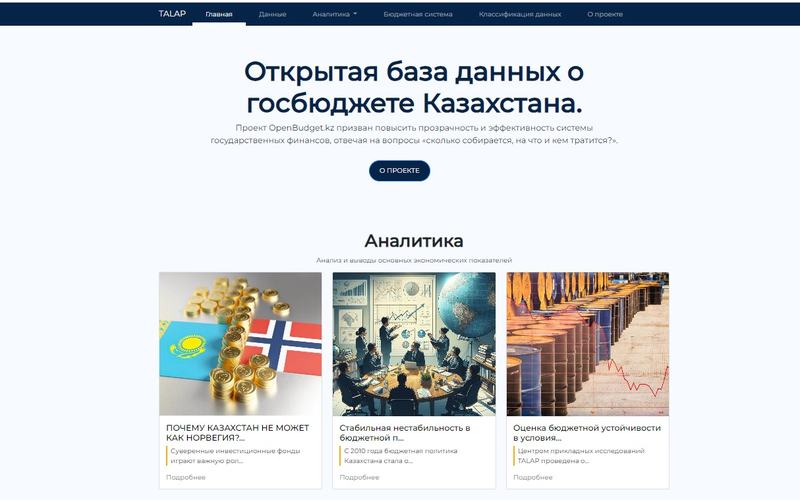
We are glad to announce the update and relaunch of the site openbudget.kz ! The portal is dedicated to increasing transparency and accessibility of data on the budget of Kazakhstan. Updated website OpenBudget.kz It provides users with even more opportunities to analyze budget data, which makes the process of monitoring government spending more accessible and transparent. Analytical articles and notes on public finance issues will be published periodically on the portal.
Kazakhstanis are going to be obliged to take consent from their spouse when receiving loans. How will this affect the banking sector and each of the citizens of the republic? For more information, see the Results program
Leading economists discussed housing market trends in Kazakhstan. Will there be an increase in housing prices in Astana and Almaty, stagnation and the expectation of stabilization. Is it profitable to invest in real estate now? The impact of preferential programs and leases. Risks of DDU, unfinished buildings and shareholders. Problems of social housing and urban planning, urbanization and competent management. Opportunities for buying housing on benefits.
Hi! We return after a break (vacation, work trips). And we return in a slightly unusual format. Today there will be fewer primitive questions from the moderator, but more of a conversation between two expert economists. Eldar Shamsutdinov invited Askar Kysykov, Director of the TALAP Center for Applied Research, to visit. And an interesting (and most importantly not too "abstruse", as Eldar sometimes likes) conversation came out.
The events of the last two years, with major geopolitical upheavals, have posed a serious challenge for the countries of Central Asia –– Kazakhstan, Kyrgyzstan, Tajikistan, Turkmenistan, and Uzbekistan. These states have skillfully maneuvered the changing political landscape, adhering to a balanced foreign policy. They have adeptly avoided making unequivocal alliances with any sides and focused on economic cooperation.