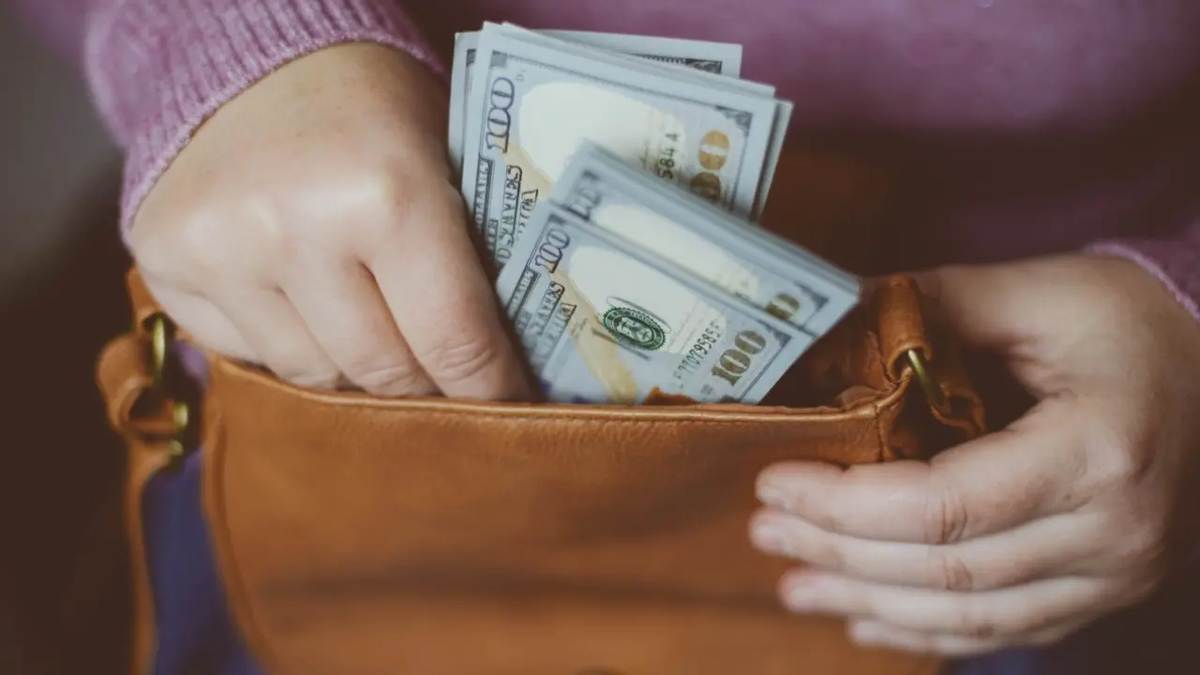
The situation with the dollar exchange rate in Kazakhstan has been volatile since mid-July. On July 15, the head of the government, Olzhas Bektenov, stated that according to the baseline scenario being considered by the government, the dollar exchange rate would be at 540 tenge, assuring that no sharp depreciation of the national currency is expected in Kazakhstan. Although from July 10 to 16, the tenge strengthened from 519 to 529 tenge, on July 17 it rose to 532.74 tenge, increasing by 6.05 tenge in one day.
The infographic was generated using ChatGPT. According to economist Arman Beisembaev, Bektenov's statement became a signal for market participants: the government is counting on this exchange rate, and it may become a new benchmark.
"In conditions of high market sensitivity, an official of such a level simply cannot afford such careless statements. Yes, later the financial regulator tried to soften the perception of these words. But we remember how similar statements caused a stir last year: it was also said, 'today – 500, tomorrow – 600.' Such phrases shape expectations and trigger a wave of speculation," said the economist.
On July 21, the dollar exchange rate in the country decreased to 529.44 tenge, which Arman Beisembaev called not a reversal, but merely a pullback of the upward trend. Against the backdrop of the pullback, the expert had the impression of an attempt to stabilize at the current level, rather than a radical reversal. "There is a high probability that this is the result of the National Bank's intervention, which is trying to smooth out sharp fluctuations in the exchange rate and prevent a sharp rise. This was particularly noticeable last Thursday and Friday, after the rate jumped sharply by 6 tenge. For the market, this is a significant movement," noted the expert. The expert clarified that, in his observations, not only supply and demand were at play in the currency market. It could have been both the actions of the regulator and the intervention of a large exporter who dumped currency revenue. Therefore, he assumes that the National Bank conducted targeted interventions, although this is not visible at the moment, and official explanations usually come later. Currently, in the analyst's opinion, a self-sustaining cycle is forming. Demand for foreign currency is fueled by both the holiday season and the implementation of state programs and purchases for infrastructure projects. Importers convert revenue into currency to purchase goods, and the population, observing the rise in the exchange rate, also begins to buy dollars to "not miss out." All of this increases pressure on the tenge.
"Thus, by autumn, the exchange rate is likely to remain in the current range or rise higher. A short-term correction is possible – the tenge may strengthen by 5-6 points. But in the long term, we may well see the dollar exchange rate at 540 tenge and above," predicted Arman Beisembaev.
The official dollar exchange rate as of July 24 was 538.64 tenge, according to the National Bank. Should one invest in dollars or has the moment been missed? It is too late to buy currency on the rise. For short-term speculation, the moment has already been missed. "Now is the optimal moment for those who already bought dollars at the spring rate of 480-490 tenge: they can lock in profits. Those who entered at 530 can only wait and hope for further growth. There is a risk of being stuck at this level for a long time. However, if you plan to hold the currency for two to three years, there is not much difference; the exchange rate will almost certainly be higher than the current one. The only exception is if you need the currency right now, for example, for a trip abroad. In that case, the choice of exchange rate is a matter of necessity, not profit," he explained. The expert suggests adhering to a universal market principle: buy on the dip, sell on the rise. The tenge, according to the economist, does not differ in stability due to Kazakhstan's still deficit budget, high dependence on imports, and active spending on reforms and infrastructure projects. All of this creates demand for foreign currency and does not contribute to the strengthening of the tenge.
"Moreover, too strong an exchange rate is not beneficial for the state itself. We sell raw materials, receive currency revenue, and from this revenue, we pay taxes. In this context, a higher dollar exchange rate increases budget revenues. This logic was also evident in January last year when the tenge strengthened to 440 per dollar against the backdrop of a tranche from the National Fund, after which the government possibly turned to the National Bank with a request to weaken the exchange rate to make it easier to balance the budget," the speaker explained.
In his view, the tenge exchange rate cannot be called completely free, but it is also not fully controlled. The National Bank allows fluctuations, letting the exchange rate float within a certain range. Similarly, in Russia, an exchange rate of 80 rubles per dollar creates problems for the federal budget. "We have similar economic structures, and there is also a pressing issue of the exchange rate there. The authorities would like to see the exchange rate closer to 100 rubles because a strong currency reduces ruble budget revenues from exports. However, due to sanctions and distortions in the economy, it is difficult to weaken the ruble. Moreover, since 2022, the ruble has effectively ceased to be freely floating and freely convertible," the specialist explained. Why inflation seems higher than on paper. The expert explained that official inflation is an average indicator across the country and categories of goods. It shows the overall dynamics but does not reflect individual expenses. Everyone has their own consumer basket: some spend more on food, others on services. Hence the feeling that "real inflation" is higher than reported.
"Moreover, the level of income is important. For those with a salary of 150,000 tenge, the rise in prices is perceived more acutely than for those whose incomes are several times higher," he said.
According to the speaker, food prices will always rise. Utility tariffs, according to government plans, will increase at least until 2029 to reach market levels. Today, they are still undervalued by about 2-2.5 times. The same applies to gasoline, diesel, and gas. These categories are still far from their economically justified levels and have growth potential, as do fines and taxes.
"The signed Tax Code is only an intermediate stage. The state needs more revenue, and this will lead to further increases in the fiscal burden," believes Arman Beisembaev.
The director of the Applied Research Center TALAP, Askar Kysykov, noted that high inflation, which has approached 12%, remains the main problem of the Kazakh economy today. This mark is one of the highest indicators in recent years. For comparison, in Russia, the current inflation level is about 10%.
"Despite steady GDP growth and an increase in nominal incomes, real monetary incomes of the population are practically not growing, their increase does not exceed 1%. The main reason is inflation, which neither the National Bank nor the government has yet managed to tackle. They are likely to take measures to prevent further price acceleration. At the same time, further tariff increases are planned from the beginning of the year, which may also intensify inflationary pressure," he reflects.
This situation has obvious social consequences: consumption is falling, the standard of living is decreasing, especially among socially vulnerable groups. An additional pressure factor will be the increase in VAT from the beginning of 2026. Nevertheless, in the expert's view, it is premature to talk about large-scale social upheavals – Kazakhstan has experienced periods of even higher inflation.
"The key tool for stabilization remains social policy. In conditions of rising prices, families with low incomes suffer the most. Here, the work of the targeted social assistance system (TSA) is critically important. Mechanisms of support are already in place in the country: housing subsidies, compensation for utility payments. The Ministry of Labor is currently working to improve the efficiency and targeting of these measures," Kysykov reminded, adding that considering the upcoming increase in the subsistence minimum, poverty lines, and rising social expenditures, negative consequences can be mitigated and serious social tension avoided.
Financial advisor at R-Finance, Arman Baiganov, reminded that since the beginning of July, the US dollar index (DXY) has risen by 2%, indicating a general strengthening of the American currency against major world currencies. And this exerts additional pressure on the tenge.
"A negative internal factor remains the growth of Kazakhstan's public debt. Its servicing is becoming more expensive against the backdrop of a budget deficit, and additional tax revenues will only start coming in from the new year. This means that in the coming months, one should not expect the tenge to strengthen," he believes.
It is also necessary to consider the impact of sanctions against Russia, which indirectly affect Kazakhstan. In addition, internal inflation in the republic is higher than in the USA, making the tenge less stable.
"The decline in oil prices also adds pressure. In recent months, the price of a barrel of oil has dropped to $70 and below, while last year it was closer to $80. The ongoing sanctions war by the USA is also having an impact," he reminded.
What to invest in? Some may think that the dollar has potential for weakening and prefer tenge deposits, for which banks do indeed offer higher rates. If other investment instruments are of interest, one can invest in corporate bonds, which yield up to 20-22%. Real estate remains a less risky but less liquid instrument; it does not always sell quickly, especially if money is needed urgently. In the housing market, those who know it well are mainly active. At the same time, the expert does not consider gold to be the most profitable investment due to the large spread (the difference between the purchase price at which it is bought and the selling price at which it can be sold). Arman Baiganov noted that a good alternative is investing in oneself: knowledge, education, and skills enhancement. For larger investments (from $5,000 to $10,000), securities are suitable. Investing in foreign securities should be done through trusted financial agents. The main thing, the expert emphasizes, is to learn to manage your income wisely: live within your means, save, and preserve.