When state finances sing romances
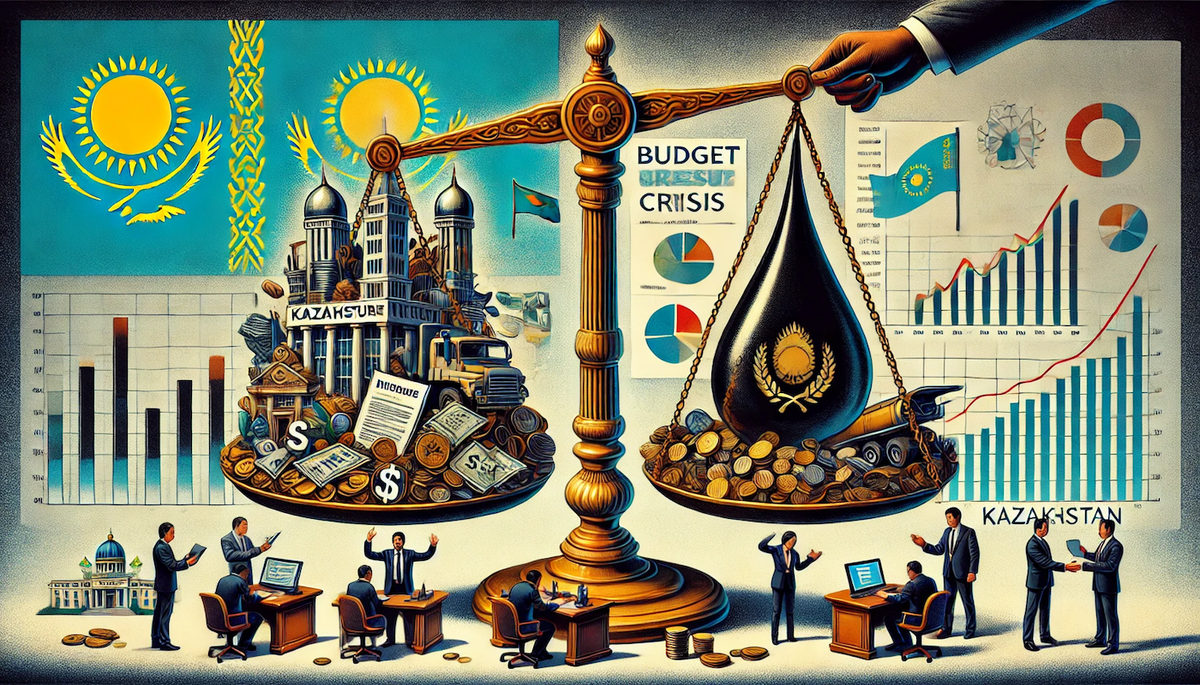
The expenditures of the local and republican budgets in 2024 increased by 13.4%, amounting to 34.7 trillion tenge. The spending exceeded the revenue part of the budget by almost a quarter or 7.6 trillion tenge. Experts have already warned about the crisis of state finances that awaits us this year. However, judging by the picture of the first months of the new year, the government does not recognize the problem, thereby exacerbating it. At the same time, the Left Bank suggests that the country tighten its belts and live within its means. All this sounds against the backdrop of an impending tax increase and virtually un-discussed cuts to inflated budget expenditures. Although the president has repeatedly demanded that the government focus on the rational use of budget funds, increase the efficiency of state structures, and avoid unreasonable spending. How to translate a survival budget into a development mode? And what to do with state finances that have been singing romances for the last few years? We are exploring this with experts. The Director of Public Administration and Policy at the analytical center “Desht” Alibek Konakov notes: the growth of budget expenditures accompanies the development of the economy.
“Today, the state budget expenditures of Kazakhstan account for about 22% of GDP, while in countries with higher-than-average per capita incomes, this figure is over 30%, and in high-income countries – over 40% of GDP. At the same time, the dynamics of state expenditures over the past 10 years have been moderate. The ratio of state budget expenditures to GDP increased from 2014 to 2024 by about 3 percentage points to 22.6% (if using the government’s forecast for GDP volume in 2024), - notes the economist.
For individual items, the changes were also moderate: the largest increase was observed in education expenditures (from 3.4% to 5%), social assistance and provision (from 3.9% to 4.5%), and debt servicing (from 0.6% to 1.7%).
“The budget deficit during this period has not changed, remaining at 2.7%. Of course, this level is supported by significant transfers from the National Fund, but the non-oil deficit is also not growing and even shows some negative dynamics, decreasing from 9.5% to 8%,” - continues the analyst.
At the same time, optimizing budget expenditures is undoubtedly necessary, he believes.
“Currently, the structure of expenditures shows an absolute predominance of current costs over capital ones (79% versus 17%). At the same time, this situation has only strengthened over the past 10 years. Current costs have significantly expanded (their share in the structure has increased by 10 percentage points), particularly due to the growth in transfers to individuals (from 17% to 20%), salaries (from 12% to 14%), and payments for internal loans (from 3% to 6%). At the same time, capital expenditures have slightly decreased during this period (from 19% to 17%)”, - says Alibek Konakov.
He also notes the growth of subsidies to regions – their share in the structure of expenditures increased from 15.2% to 22.8%.
“Today, 17 regions of the country are subsidized, of which in 8 regions, transfers from the republican budget account for more than half of the local budget revenues: Turkestan (67.6%), Kyzylorda (62.9%), Zhambyl (60.8%), Kostanay (50.7%), Akmolinskaya region (50.2%), SKO (63.4%), Zhetysu region (65.5%), and Abai (53.8%)”, - says the economist.
Alibek Konakov - Director of Public Administration and Policy at the analytical center “Desht”
All these trends highlight the need to improve the institutional environment,” - emphasizes the interlocutor of TAJ.report. An economy with a dynamic private sector not only generates revenues for the budget but also reduces current costs by creating more high-income jobs, he stresses.
“Of course, fiscal balance problems are characteristic of such economies, but the difference is that investment attractiveness keeps them afloat. Therefore, the governments of these countries do not think of sharply raising the main taxes,” - emphasizes the expert from “Desht”.
Three problems
Kursiv Research Director Sergey Domnin identifies three main problems of Kazakhstan's state finances.
“The first is the systematic dependence on oil revenues, which form 30 to 40% (in some periods – up to 50%) of the budget's revenue part. This dependence is caused by a historically unbalanced budget, where effective budget rules to limit the growth of expenditures did not operate for a long time (until 2023). The second problem is the deterioration in the quality of revenue planning, especially tax revenues from two key tax groups – corporate income tax and value-added tax. Actual revenues have chronically deviated significantly from forecasts, and throughout the year, several adjustments were needed to bring the plan and fact closer,” - says the expert.
The third problem is the high and increasing rates of growth in the expenditure part of the state budget, which are not balanced by the growth of tax revenues.
“If in the period 2010-2019, when the growth rates of the economy were at 4.4%, and consumer inflation – 7%, budget expenditures grew on average by 14% per year. In 2021-2024, against the backdrop of average GDP growth rates of 4.5% and inflation of 12%, budget expenditures accelerated to 16% per year. State budget expenditures are also growing structurally: if in 2010-2019 their ratio to GDP averaged 19.9%, then in 2021-2024 it was 21.7%. It seems to be a non-critical growth, but it is not fully compensated by the growth of tax revenues: in the corresponding two periods, they accounted for 13.0 and 14.4% of GDP, respectively,” - notes Sergey Domnin.
That is, for a structural growth in expenditures of about 1.8 percentage points, we responded with a growth in non-oil revenues of 1.4 percentage points. In the long run, these several percentage points against the backdrop of other chronic budget imbalances have led to a serious imbalance in the state budget, he states. What should be done to ensure that we have a development budget rather than a survival budget? To begin with, the analyst suggests clarifying the terminology.
"I may be mistaken, but in the Budget Code of the Republic of Kazakhstan, there is no such term as “development budget.” It mentions, for example, transfers for development, there are budgets according to the development plans of certain state bodies or regions, but there is no mention of a “development budget” as a structural part of the state or republican budget. This is a category from the reports of the Accounts Chamber, under which, apparently, part of the expenditures of the state and republican budgets is understood as capital expenditures, that is, expenses for the creation of tangible assets, fixed assets,” - clarifies the interlocutor of the channel.
This includes the construction of buildings and structures – roads, bridges, dams, engineering networks, and so on. These expenditures contribute to job creation during the construction period, generate demand for investment goods, and, with proper allocation, ensure long-term economic growth.
“By the end of 2024, the share of capital expenditures in the structure of the state budget of the Republic of Kazakhstan will be 17%, in 2019 it was at the level of 13%, in 2015 – 15%, in 2010 – 23%. But at the central level, they are dissatisfied not only and not so much with the fact that the share of capital expenditures in the structure of state expenditures is decreasing. Most of these funds are distributed at the local level, and in the structure of the republican budget, these expenditures are no longer 23%, but 10%. At the same time, a significant part of such expenditures has recently been financed by transfers from the National Fund,” - focuses the analyst's attention.
Sergey Domnin - Director of Kursiv Research
Government speakers say that the state needs to invest more in fixed assets, he reminds.
“Theoretically, it is possible to redistribute funds between existing groups of expenditures – from current to capital. However, it is difficult to reduce current expenditures both technically and politically: two-thirds of their structure consists of pensions, benefits, and salaries of budget employees, a quarter – state purchases, and about 10% – debt servicing. This means that it is necessary to increase revenues. Perhaps increase the size of transfers from the National Fund? But President Tokayev set the task of bringing the volume of National Fund assets to $100 billion by the end of 2029. This task cannot be accomplished solely through the growth of investment income. How to solve the problem under such conditions? The answer is obvious: structurally increase the share of tax revenues. How to do this considering the current inertia of growth in the taxable base? Only through increasing the rates of taxes collected in the republican budget – VAT and CIT,” - believes the head of Kursiv Research.
Eliminate imbalances
The Director of the Applied Research Center “Talap” Askar Kysykov states: in recent years, the problem of budget sustainability has become significantly aggravated.
“The discussion that is currently taking place, especially regarding tax increases, VAT rates, and other serious changes, is justified by the need to finance the budget deficit. At the same time, only one component of the system is shown – the republican budget. However, there is a local budget, the National Fund, off-budget funds. This is a complex system of state finances, and it is impossible to make major reforms, especially in terms of taxes, by operating only one element,” - emphasizes the economist.
The national economy depends on the oil sector: the share of oil in exports is 60%. These revenues go to the National Fund, and Astana has a desire to eliminate budget dependence on oil revenues.
“A good desire that has not been questioned for many years. But under current conditions, this task is impossible, as the oil sector occupies a serious share in the economy, has a multiplicative effect on all sectors, including business. In an oil economy, we will depend on oil revenues. The other question is how we manage them. And the government's desire to completely cut off oil revenues seems like it is shooting itself in the foot,” - says the interlocutor.
He reminds that at the last meeting with business, the president said: The National Fund is an integral part of the economy, and we should not ring alarm bells over the use of oil revenues.
“Part of them is used through the budget to finance social programs, development budgets, and so on. What is called the oil curse, I consider a blessing: production is growing. According to estimates, in 2025, additional revenues from the expansion of TSO will amount to 1.4 trillion tenge. The growth of oil revenues is not only revenues to the National Fund. Part goes to the republican budget as an export customs duty. And the primitive accounting approach to solving budget imbalances that many experts want to impose is absolutely wrong,” - believes the economist.
It is important to balance the consolidated budget, which includes the republican, local budgets, and the National Fund. The task is to make the entire system surplus, emphasizes Askar Kysykov.
“The goal declared by the authorities to accumulate $100 billion in the piggy bank by 2029 I consider dubious and hardly achievable. $80-90 billion is also acceptable. It is not a disaster if part of the money is invested domestically in various areas, including the development of human capital, improving infrastructure,” - says the interlocutor of the channel.
We have something to cut
“Clear budget rules are needed - what part of oil revenues can be used for financing within the republican budget, and what part for local budgets,” - continues Kysykov.
A reform has been carried out with the latter – they have been given more tax base, individual income tax, social tax, and part of corporate income tax from SMEs. Revenues from large businesses go to the republican treasury.
“In conditions where the republican budget is not collecting enough taxes, it is necessary to carefully study local budgets. Often, there is money left at the local level that is spent by akimats. Regional authorities receive a lot of funds and try to quickly utilize them. I think there are many ineffective projects and expenditures there. Accordingly, transfers should be adjusted, and regions should be given less money through subsidies,” - believes the economist.
Askar Kysykov - Director of the Applied Research Center "Talap"
Regarding the opinion on the growth of the expenditure part of the budget, he notes that the indicator of state budget expenditures to GDP is stable.
“Over the past 5 years, it has been 22-24% of GDP. When it is said that state budget expenditures have increased significantly, it should be noted that they have increased in nominal terms. And taking into account inflation, the depreciation of the tenge, the budget grows at the level of accumulated inflation and the devaluation of the tenge. The same applies to the size of transfers from the National Fund – if converted to dollars, it is about $10-11 billion. They have a stable level. Earlier, the concept of managing the National Fund fixed a guaranteed transfer of $10 billion, then its threshold was attempted to be reduced to $8 billion (unsuccessfully). I believe that the last amount is an adequate volume to maintain the stability of the country’s budget,” - continues the expert.
He reminds of the two functions of the national piggy bank - saving and stabilization. And when the economy is in crisis, accumulated reserves can be used to finance it (including social needs).
“This is a counter-cyclical policy, but it does not imply an increase in the tax burden during a crisis, which, on the contrary, should decrease. In such periods, reserves are spent, the deficit increases, and when there is an upturn, taxes are raised, and resource accumulation occurs. This approach should also be used in expenditures. The expenditure part, to put it mildly, is ineffective; there are opinions that there is supposedly nothing to cut in the budget. I disagree - there are still large reserves, including in the social part. There are capital expenditures; besides salaries, there are purchases - everything needs to be studied and optimized, as well as the research of quasi-state structures for ministries, whose efficiency is minimal, while costs are colossal,” - notes the head of “Talap”.
In his opinion, expenditures should be cut in many other areas, especially in financing the real sector, when year after year the authorities try to develop the same industry by pouring large amounts of money into it, including through the quasi-state sector.
“Bureaucrats can either increase the budget or strengthen regulation in the industry. And when a new minister comes, for example, of agriculture, and asks for another trillion tenge for the development of a priority industry, its efficiency will not change with an increased budget. Because the tools are old and ineffective. If we analyze the volumes of subsidies for agriculture last year and the effectiveness of these investments, we will see low results. Continuing such a practice is impractical; the entire support system for this industry needs to be reviewed. It is necessary to address institutional issues - the economic turnover of land and other aspects, and so on - across all sectors: in medicine, OMS, education; improve procurement. I am sure - the potential for optimizing budget expenditures, including at the local level, is very high,” - says Askar Kysykov.