The exchange rate of the Kazakh currency is staggering under the pressure of the budget, vacations and emotions. The National Bank intervenes pointwise, but the market is already living up to expectations of a dollar appreciation.
To what extent the republic's budget is social and how corruption components reduce the effectiveness of government spending.
Why arguments about Kazakhstan's social budget are a myth, and where the budget trillions actually go, says economist Askar Kysykov.
The Government of Kazakhstan is working to grow the economy, and it is necessary to improve the quality of life of the population. The goal determines the means. Maybe the wrong goals were initially chosen in the country? In which direction should the vector of the government's policy turn in order to grow not only the economy, but also the quality of life of Kazakhstanis? We are talking about this today.
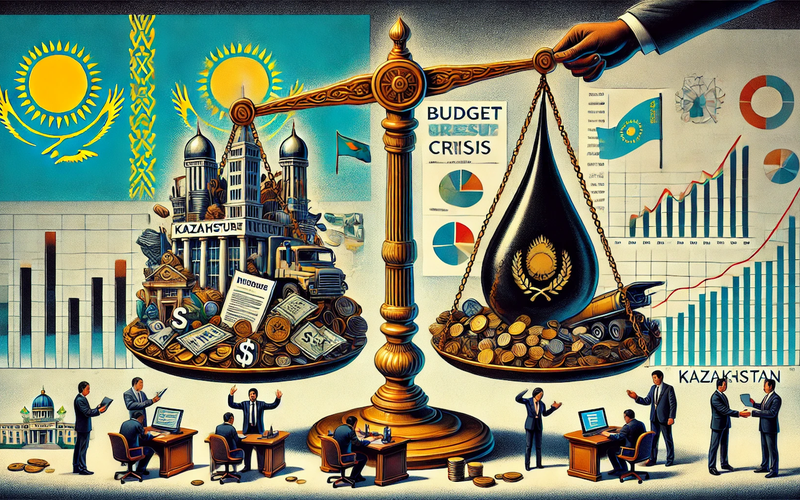
The gap between income and expenditure of the domestic budget is growing. According to the most optimistic calculations of the government, this year the country's budget deficit will amount to more than 4 trillion tenge. What is the risk of this imbalance and what to do? We'll find out today. When state finances sing romances Expenditures of the local and national budgets in 2024 increased by 13.4%, eventually amounting to 34.7 trillion tenge.
The main factor of influence is the economic policy of the government What trends will determine the housing market in Kazakhstan this year, how will inflation, the dollar exchange rate and other factors affect the industry? Why don't we have mortgages at 2% per annum, as in Germany? And what needs to be done to ensure that as many citizens as possible have a roof over their heads? We are discussing with market experts and economists.
For the past few days, pension payments from a single accumulative pension fund in Kazakhstan will be able to determine from the bottom line. As the head of the government noted, in the address of the Senators, studying the social significance of the issue, as well as the international practice on visits and visits, it is proposed to resolve the IPN pension issue from the ENPF.
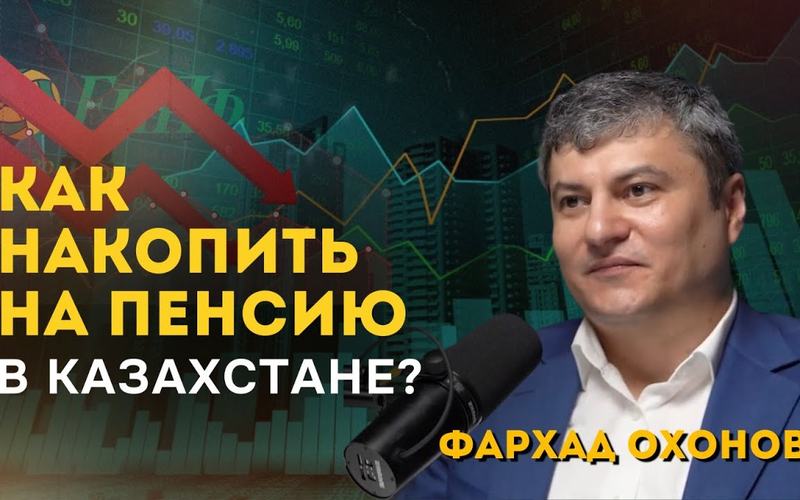
Our guest is Okhonov Farhad Rashidovich, Chairman of the Board of Halyk Finance. The accumulative element of the pension system is the object of constant public criticism. One of the problems is the low investment profitability. During the period of the UAPF's existence (2013-2023), the accumulated investment yield amounted to 139.2% with accumulated official inflation of 153.8%. At the same time, during this time, the tenge exchange rate weakened by 202%.
In today's issue, experts will talk about youth housing, both rent-free and foreclosed, as well as various mortgage programs. What are the conditions of these programs? How accessible are they for young people who are just starting their career and, accordingly, earn much less than their older colleagues who have professional experience and extensive work experience? For more information, see the new issue of the Results program.
In recent years, Kazakhstan's economy has been shaken not only by global shocks but also by internal structural problems. The expert community has brought to the fore questions about the efficiency of public finance management and the need to adapt to new economic realities. Whether Kazakhstan faces a public finance crisis was discussed by experts at a round table organized by the TALAP Center for Applied Research.
Kazakhstanis are going to be obliged to take consent from their spouse when receiving loans. How will this affect the banking sector and each of the citizens of the republic? For more information, see the Results program