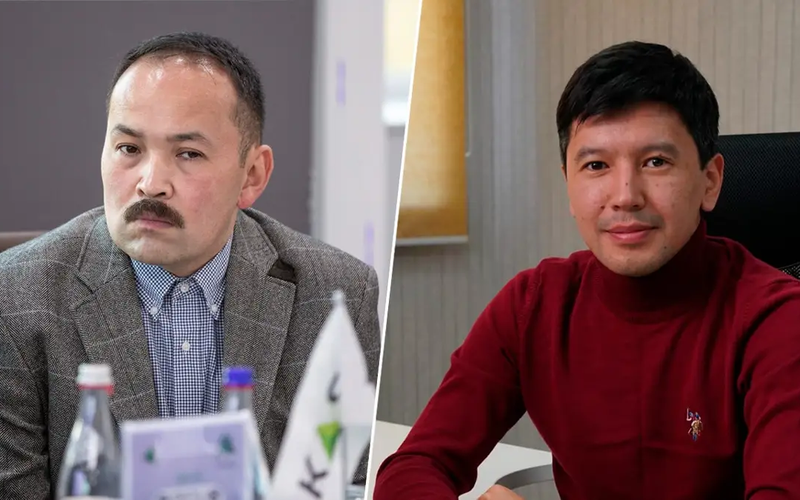
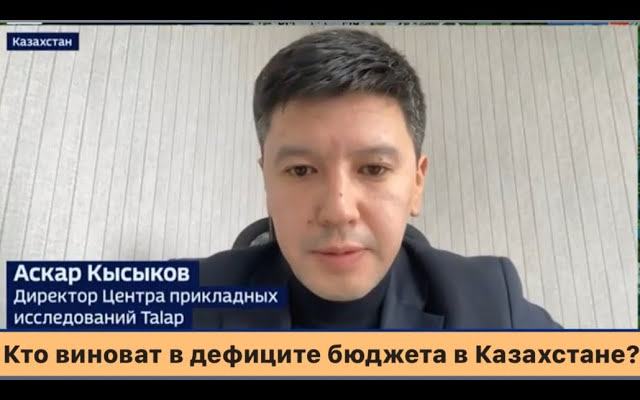
Tax reform will not solve the problem of Kazakhstan's state budget deficit, and comprehensive measures are needed to address this issue. This opinion was expressed by the director of the Talap Center for Applied Research, Askar Kysykov, on the Rossiya 24 TV channel. The Government of Kazakhstan is discussing tax reform, which implies an increase in VAT from 12% to 20%.
A possible increase in VAT in Kazakhstan from 12% to 20% will lead to higher prices, lower real incomes and higher inflation. This forecast was made by Askar Kysykov, director of the Talap Center for Applied Research, on the Rossiya 24 TV channel. The Government of Kazakhstan is discussing tax reform in order to solve the problem of the state budget deficit. The reform involves an increase in VAT from 12% to 20%.
The National Bank recently decided to keep the base rate at 15.25% per annum with a range of +/- 1 percentage point, Kazinform agency correspondent reports.
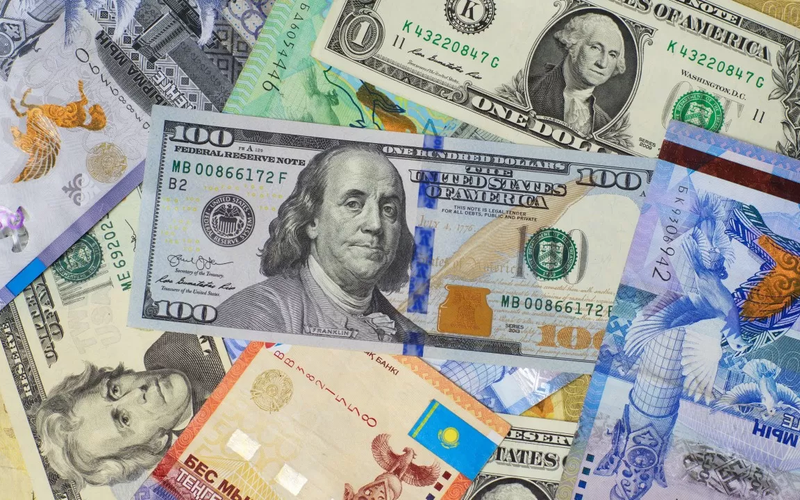
At the end of last year, the dollar exchange rate in the exchangers of Kazakhstan exceeded 530 tenge.
Chinese marketplaces are killing Kazakhstan's SMEs-publications with such headlines have periodically appeared in local media over the past year. In Russian, by the way, too. What is behind the information attacks on Chinese platforms, with what results does e-commerce end the year in the country, and what problems should actually be solved? Read about this in today's TAJ.report analysis.
The state is still involved in the economy In May of this year, the Presidential Decree "On measures to liberalize the economy" was issued. The document is aimed at ensuring freedom of entrepreneurship through the development of competition, reducing state participation in the economy and reducing business costs.
National companies of Kazakhstan will again be obliged to sell half of foreign currency earnings. The relevant resolution was prepared by the Government and the National Bank. The measure is aimed at improving the balance of the foreign exchange market, according to the responsible persons. The dollar is getting more expensive, oil is getting cheaper and the tenge is under stress again.
Comments from various economists, financiers and other people from the world of "money" have already been "infused" after Tokayev's message, where he called on everyone to "live within their means." And who does he make these traditional messages for anyway? One of these about the "National Fund", from which it is "impossible" to take, has long been forgotten. And what did he say this time? It didn't work out very well for us in a completely human language, but Dima tried his best.
In one of our previous issues, we talked about the catastrophic debt burden of Kazakhstanis. Among the reasons for the current situation, experts then called the policy of banks, which in previous years were in great honor with the country's leadership, and, as a result, received gigantic financial injections. Financial institutions used it, got rich, gave these funds at interest to customers and got rich again. But it couldn't go on like this anymore.
A new political season has started in Kazakhstan, and the country is waiting for large-scale reforms. The CSTO exercises are taking place in Kyrgyzstan. Kazakhstan and Tajikistan want to enrich their friendship with uranium. Who inculcates extremist views from the outside in Kyrgyzstan, and why does Turkmenistan begin the battle for the harvest with prayer? These and other regional news are in the new season of the program "In the Center of Asia" with Robert Frantsev.
The President presented an ambitious reform program and socio-economic measures for the future. In this issue, an economist and a political scientist analyze the main points of the message.