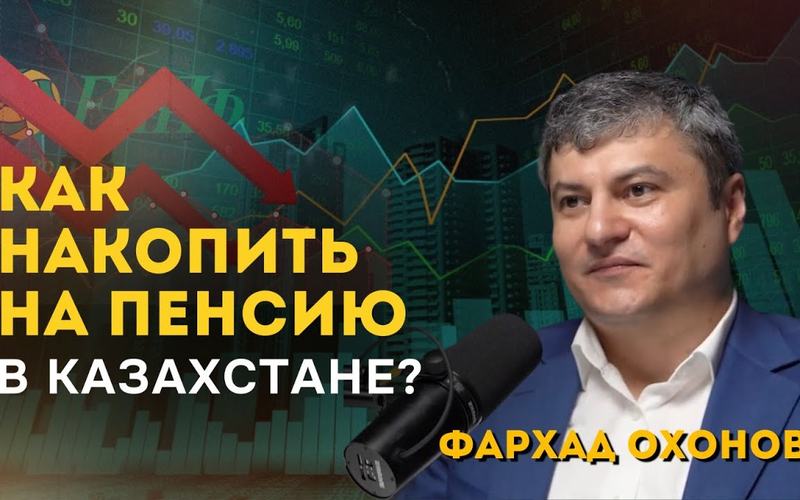
Our guest is Okhonov Farhad Rashidovich, Chairman of the Board of Halyk Finance. The accumulative element of the pension system is the object of constant public criticism. One of the problems is the low investment profitability. During the period of the UAPF's existence (2013-2023), the accumulated investment yield amounted to 139.2% with accumulated official inflation of 153.8%. At the same time, during this time, the tenge exchange rate weakened by 202%.
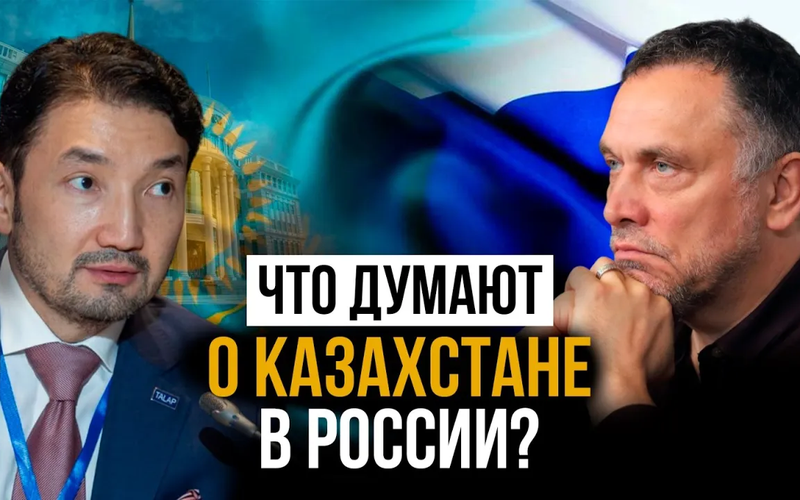
If you look at the relations between Kazakhstan and Russia from the outside, you can see the largest land border in the world in terms of length, and a huge number of bilateral agreements, unions and organizations that include both countries. However, it is worth looking deeper as it becomes obvious that most joint organizations do not work at the proper level, and agreements remain on paper.
In today's issue, experts will talk about youth housing, both rent-free and foreclosed, as well as various mortgage programs. What are the conditions of these programs? How accessible are they for young people who are just starting their career and, accordingly, earn much less than their older colleagues who have professional experience and extensive work experience? For more information, see the new issue of the Results program.
On April 19, the TALAP Center for Applied Research held a round table on the topic " Is Kazakhstan in danger of a crisis of state finances ", where a presentation "Current problems of the state finance system" was presented.
In recent years, Kazakhstan's economy has been shaken not only by global shocks but also by internal structural problems. The expert community has brought to the fore questions about the efficiency of public finance management and the need to adapt to new economic realities. Whether Kazakhstan faces a public finance crisis was discussed by experts at a round table organized by the TALAP Center for Applied Research.
Kazakhstanis are going to be obliged to take consent from their spouse when receiving loans. How will this affect the banking sector and each of the citizens of the republic? For more information, see the Results program
Leading economists discussed housing market trends in Kazakhstan. Will there be an increase in housing prices in Astana and Almaty, stagnation and the expectation of stabilization. Is it profitable to invest in real estate now? The impact of preferential programs and leases. Risks of DDU, unfinished buildings and shareholders. Problems of social housing and urban planning, urbanization and competent management. Opportunities for buying housing on benefits.
Hi! We return after a break (vacation, work trips). And we return in a slightly unusual format. Today there will be fewer primitive questions from the moderator, but more of a conversation between two expert economists. Eldar Shamsutdinov invited Askar Kysykov, Director of the TALAP Center for Applied Research, to visit. And an interesting (and most importantly not too "abstruse", as Eldar sometimes likes) conversation came out.
The events of the last two years, with major geopolitical upheavals, have posed a serious challenge for the countries of Central Asia –– Kazakhstan, Kyrgyzstan, Tajikistan, Turkmenistan, and Uzbekistan. These states have skillfully maneuvered the changing political landscape, adhering to a balanced foreign policy. They have adeptly avoided making unequivocal alliances with any sides and focused on economic cooperation.
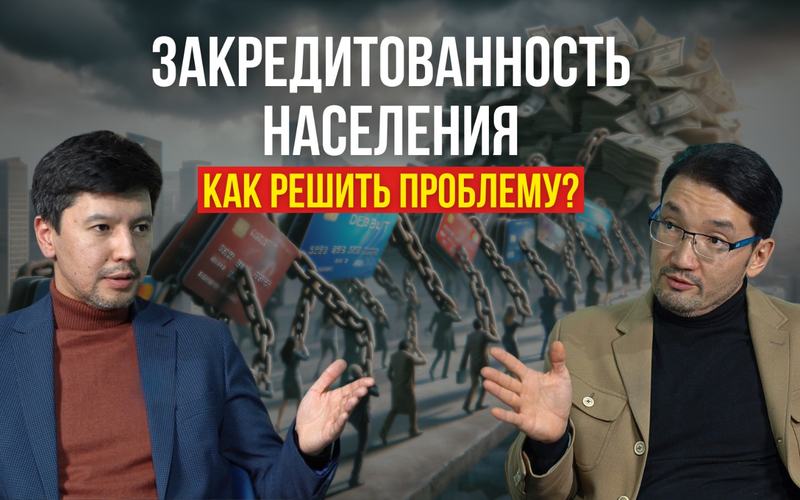
The Center for Applied Research "TALAP" has been advocating for a systematic solution to the problem of over-crediting of the population of Kazakhstan for many years.
As you know, the previous government failed to develop a New Tax Code of Kazakhstan, offering only a harmful increase in VAT and other taxes from the new one.